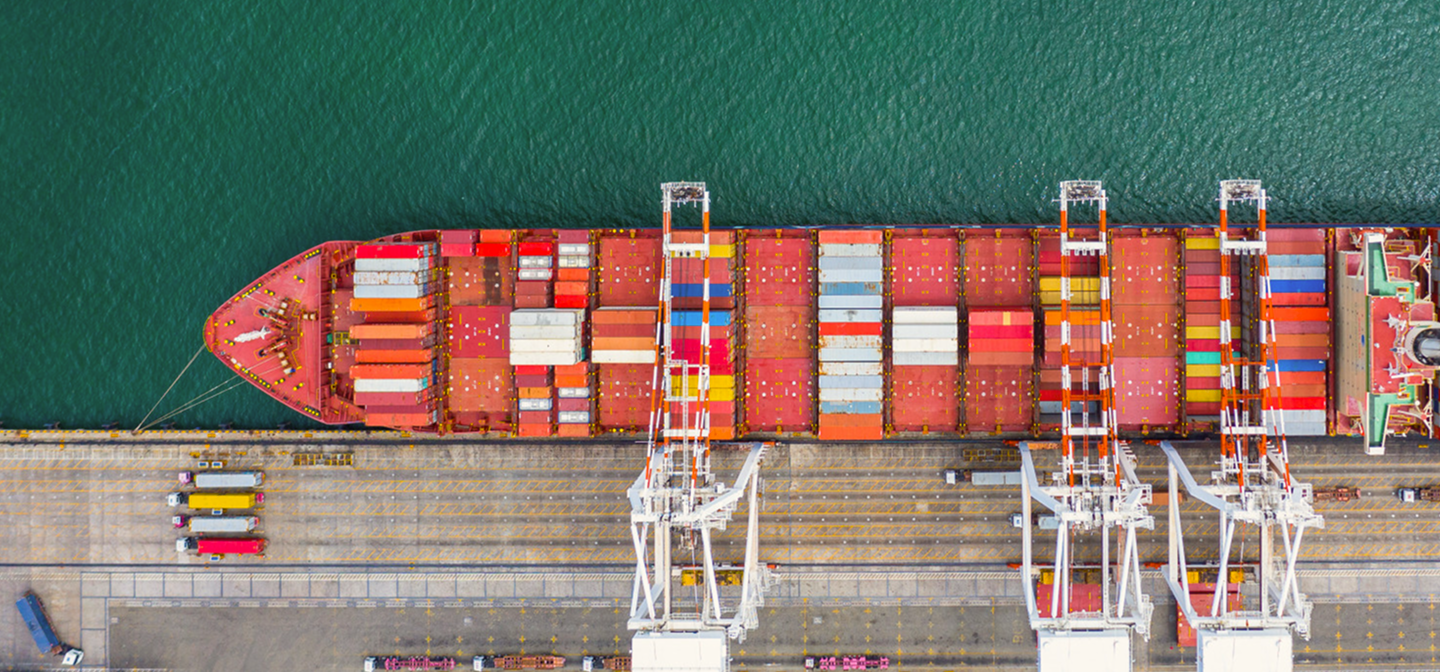
FCL and LCL ocean shipping across major global trade lanes, with customs clearance and tracking handled from origin port to final delivery.
Ocean freight is still the most cost-effective way to move bulk cargo internationally — but only if it's routed correctly. Our team books FCL (Full Container Load) for larger volumes that fill an entire container, and LCL (Less than Container Load) for smaller shipments that share container space with other cargo, keeping costs proportional to what you're actually shipping.
Freight is coordinated through our Long Beach, California hub and partner terminals at major U.S. ports, with customs brokerage and documentation managed end to end so your cargo clears without unnecessary delay.
The infrastructure and paperwork handled so your cargo just moves.
Established partners at major ports across North America, Asia, and Europe.
Standard, high-cube, refrigerated, and open-top containers matched to your cargo.
Licensed brokerage handles import documentation so cargo clears without delay.
Container-level visibility from origin port loading through final destination.
From booking to delivery, a clear path across every leg of the ocean journey.
Share cargo volume, origin, and destination for an FCL or LCL rate.
Cargo is packed, documented, and loaded at the origin port terminal.
Container-level tracking gives visibility for the full duration at sea.
Our brokerage team manages import documentation at the destination port.
Cargo is dispatched by land transport for delivery to its final destination.
 Bulk Cargo
High-volume freight where FCL container rates deliver the strongest cost efficiency.
Open-top and flat-rack containers for equipment and cargo that won't fit standard dimensions.
Scheduled inventory restocks and planned shipments where cost matters more than speed.
FCL makes sense once your cargo volume approaches a full container, since you pay a flat rate regardless of how full it is. LCL is more economical for smaller shipments, since you only pay for the space you use. We'll help you compare both based on your actual volume.
Transit times vary by trade lane, but transpacific routes commonly run 2–4 weeks, while transatlantic routes are typically 1–2 weeks. We'll provide an exact estimate once we know your origin and destination ports.
Yes. Our licensed customs brokerage handles import documentation and duty coordination at the destination port so your cargo clears without unnecessary delay.
Yes, reefer containers are available for temperature-controlled cargo, with monitoring throughout the ocean transit.
Once cleared through customs, we arrange land transport to move your cargo from the port to its final destination, with the same tracking visibility the whole way.
Get a tailored FCL or LCL quote back within one business day.
Get a Sea Freight Quote